

Global Realignment
GLOBAL REALIGNMENT
The pace of global flux is tremendously increasing while producing unprecedented political, economic, and security implications. At the first level, there is a need to identify what is changing and the variables behind the flux, and at the second level, there is a necessity to understand what risks and opportunities are likely to be generated as a result.
For instance, China’s larger One Belt One Road (OBOR) vision has raised questions about how it compares with the American New Silk Road architecture for South and Central Asia. The shape of present day trade and economic passages were pretty much shaped by geographical proximity, historical linkages, and the present day political realties, and China intends to realign them in its favor. And when one does that, it has the potential to unveil economic opportunities and security risks that previously did not exist and were not anticipated.
Then there is the question of how the Trans Pacific Partnership (TPP) and the Transatlantic Trade and Investment Partnership (TTIP) agreements (if they are finalized) are likely to play out in contrast to what BRICS is attempting to shape via institutions like the Asia Infrastructure Investment Bank (AIIB). These are immensely intricate institutions which are seen as giving advantage to one or the other player.
Moreover, the opening of Iran following the nuclear deal with the P5 + 1 and the on-going and ever-widening turmoil in the Middle East are all dramatically shifting international relations – as the role of Russia becomes more prominent while that of US recedes.
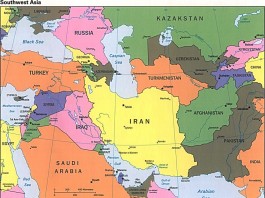
The initiation of the China-Pakistan Economic Corridor (CPEC) and the increasing global focus on the Indian Ocean and the Pacific (also identified as the Indo-Pacific region) and Central Asia, leads to the question: what do these developments mean from the vantage point of South and Central Asia, including Middle East?
PoliTact is pioneering in interpreting these game changing developments from the vantage point of South Asia and Middle East.
Subscribe to receive strategic insights that help in navigating the complex emerging future.
Emerging and Established Power Dynamics In South Asia
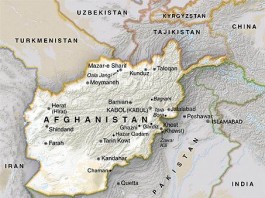
Afghanistan’s Strategic Outlook And New Geopolitical Realities
Policy Brief – Analysis of Perceptions and Perspectives
Navigating India, Pakistan, Iran, and U.S. Pressures
Context
Afghanistan’s strategic outlook is undergoing a dramatic overhaul amid escalating connectivity...

Future of Afghanistan and Balance of Power

US-China Cooperation vs. Competition

The Role of War on Terror
Global Power Tussles and Islamic World
US and Islamic World
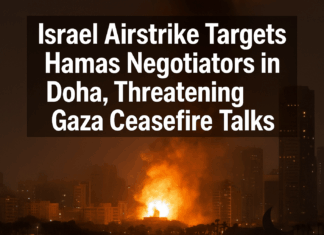
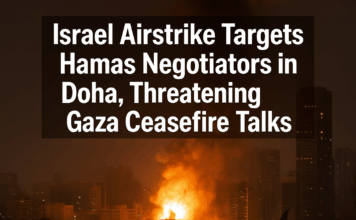
Israel Airstrike Targets Hamas Negotiators In Doha, Threatening Gaza Ceasefire Talks
Risk Assessment
Israel Strike in Doha Shakes Middle East Stability
Context
Israel struck Doha on September 9th—an attack that targeted Hamas political leaders during Gaza ceasefire negotiations...
China and Islamic World
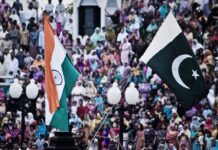
India-Pakistan Ceasefire And The Way Forward
By Naade Ali
South Asia and Middle East Fellow, PoliTact
Context
The recent brief yet intense escalation between India and Pakistan has further exposed the fragile nature...
Russia and Islamic World
The Pivot to Asia: How Will South Asia and Middle East Respond?
The Pivot and South Asia - Indo-Pacific Strategy
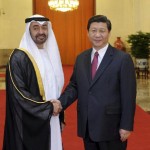
Great Power Rivalry And China’s Deepening involvement In South Asia, Gulf States
Context
In an endeavor to understand the emerging geopolitical realities, PoliTact partners with leading thought centers to understand the longitudinal multi-faceted tangents of a particular...
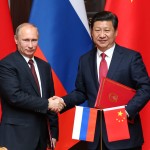
Status of Global Alliances: US Afghan Withdrawal, Evolution Of SCO, And Creation Of AUKUS
Context
The Shanghai Cooperation Organization (SCO) held its head of state summit in Dushanbe, Tajikistan on September 17. The conference took place in the backdrop...
The Pivot and Middle East

From Oslo To Trump’s Abraham Accords And 20-Point Peace Plan For Gaza
PoliTact's Global Security Study
With inputs from Naade Ali and Arif Ansar
Context
Negotiations on the Trump’s 20-point Gaza Peace Package has been ongoing in Egypt since...
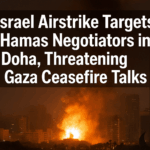
Israel Airstrike Targets Hamas Negotiators In Doha, Threatening Gaza Ceasefire Talks
Risk Assessment
Israel Strike in Doha Shakes Middle East Stability
Context
Israel struck Doha on September 9th—an attack that targeted Hamas political leaders during Gaza ceasefire negotiations...